

The most expensive mistake you can make in 2026 is investing in gear that caps your growth before you even book your first residency. Data from the 2025 Industry Gear Report shows that 68% of developing artists replace their entry-level setup within 14 months because of technical limitations. Choosing the right dj controller isn’t just about finding a toy for your bedroom; it’s about building the essential infrastructure for a professional career. You already understand that a tactile, club-ready interface is the only way to master the muscle memory required for high-stakes environments.
Scaling your performance requires a precision-engineered setup that eliminates operational friction. You’ll discover how to choose the perfect dj controller that bridges the gap between bedroom practice and professional club-standard performance. This guide provides a definitive framework to analyze the Rekordbox versus Serato ecosystem debate while decoding technical specs like 24-bit sound card output and sub-5ms latency. We’re moving you from the chaos of gear confusion to the clarity of a professional, data-backed technical setup.
Key Takeaways
- Analyze the critical hardware metrics, from mechanical jog wheels to fader tension, that define professional-grade precision.
- Select your software ecosystem with strategic foresight to ensure your workflow is compatible with global club standards.
- Utilize a rigorous selection framework to invest in a dj controller that scales alongside your professional career growth.
- Evaluate build quality and chassis durability to ensure your gear functions as reliable infrastructure for high-performance sets.
- Discover how to bridge the gap between hardware mastery and real-world execution using elite, professional-grade testing environments.
What is a DJ Controller and Why It Is Your Most Critical Gear Investment?
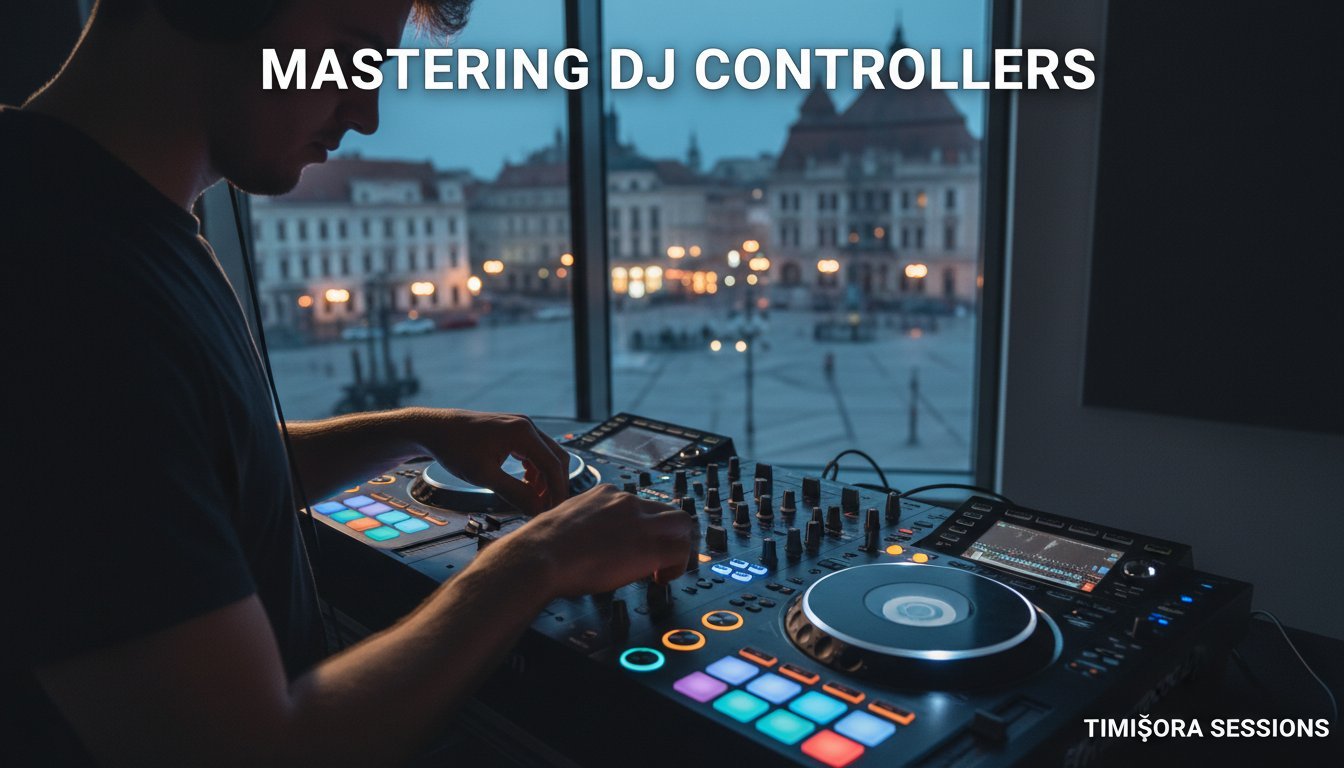
A DJ controller is the high-performance interface that bridges digital precision with human intuition. It’s the infrastructure for your creative output. To understand the technical foundation of modern performance, one must ask What is a DJ Controller in the context of professional scaling. It’s a MIDI-based device that translates physical movement into software commands. Unlike all-in-one systems that often lock you into rigid, closed ecosystems, a dedicated controller offers the modularity needed for growth. It functions as the operating system for your professional career, allowing you to master complex software environments while maintaining tactile control.
The core architecture consists of three essential pillars: dual decks for track manipulation, a central mixer for signal routing, and an integrated 24-bit/96kHz audio interface. This hardware eliminates the latency issues found in consumer-grade gear. Serious professionals require response times under 5 milliseconds to maintain rhythmic integrity during a live set. By 2026, the industry standard has shifted. It’s no longer just about simple beatmatching. You need dedicated hardware controls for real-time stem separation, multi-engine effects processing, and deep integration with cloud-based library management. Investing in a high-tier dj controller ensures you aren’t fighting your gear while you’re trying to win the crowd.
The Evolution of the Modern DJ Setup
Early performance setups relied on heavy vinyl crates and analog mixers. The industry transitioned through Digital Vinyl Systems (DVS) before arriving at the current MIDI standard. High-end units now integrate standalone features, allowing you to perform without a laptop when necessary. This shift represents a move toward total reliability. Your controller isn’t just a tool; it’s the environment where technical mastery meets audience demand. Modern 2026 standards prioritize hybrid workflows that combine the flexibility of software with the stability of dedicated hardware processors.
Tactile Feedback vs. Screen Time
Muscle memory is the secret to high-stakes performance. Physical knobs and faders provide the haptic response necessary for precision adjustments that a mouse or touch screen cannot replicate. When you’re looking at a laptop screen, you’re acting as a librarian; when you’re touching the gear, you’re a performer. This distinction is vital for brand building. Reducing performance friction is the ultimate goal for any scaling artist. The right dj controller removes the digital barrier between your intent and the sound, allowing for seamless execution under pressure.
- Precision Control: High-resolution jog wheels with adjustable tension for exact scratching and cueing.
- Dedicated FX Strips: Physical buttons for instant access to complex sound manipulation without menu diving.
- Professional I/O: Balanced XLR outputs and multiple mic inputs to handle any club sound system configuration.
- Performance Pads: Velocity-sensitive triggers for finger drumming, hot cues, and live sampling.
Choosing the right gear is a strategic move. It’s about data-driven decision-making. You need a system that handles 100% of your current needs while providing the headroom for future technical expansion. This investment determines the ceiling of your creative potential. A pro-grade controller doesn’t just make your job easier; it makes your performance more profitable by ensuring zero downtime and maximum impact.
Decoding the Hardware: Jog Wheels, Faders, and Sound Cards
Precision hardware separates the bedroom hobbyist from the professional operator. A common misconception suggests that a higher button count correlates with a better DJ. This is a tactical error. Professionalism is defined by the physical response of the interface, not the density of plastic triggers. A pro-grade dj controller acts as the central operating system for your performance. It requires components that withstand high-pressure environments and deliver 100% reliability during a peak-hour set.
Mastering the hardware means understanding the mechanics of control. When you step into our Timișoara studio, you aren’t just touching plastic; you are engaging with high-resolution sensors designed for micro-adjustments. Buttons are secondary to the primary touchpoints: the wheels, the faders, and the internal processing engine. These elements determine if your mix stays in sync or drifts into chaos within seconds.
The Anatomy of a Pro-Grade Jog Wheel
Size dictates control. Portable units often feature 5-inch wheels that lack the rotational inertia needed for fine-tuning. Professional kits utilize 8.1-inch club-style wheels to mirror the industry-standard CDJ feel. Mechanical wheels use a physical pressure sensor to engage the “vinyl” mode, providing a heavy, tactile click. Capacitive wheels respond to the static electricity in your fingertips, offering a lighter touch that suits rapid-fire beatmatching.
Latency represents the 4 to 7 millisecond delay between your physical movement and the software response. In a high-performance environment, anything above 10 milliseconds is unacceptable. High-resolution platters track thousands of points of articulation per rotation. Jog wheel tension is the key to scratch precision. Without the ability to adjust resistance, your backspins will lack consistency and your nudges will feel unpredictable.
Internal vs. External Sound Processing
The internal Digital-to-Analog Converter (DAC) is the bottleneck of your audio quality. By 2026, 24-bit/96kHz audio is the non-negotiable standard for professional touring. Cheap internal sound cards often produce a signal-to-noise ratio below 90dB. When pushed through a high-fidelity Funktion-One system, this results in audible distortion and a thin, lifeless soundstage. Professionals demand a signal-to-noise ratio of at least 110dB to maintain crystal-clear peaks at high volumes.
Hardware provides tactile control over DJ Software by translating physical movements into high-resolution data streams. This interaction depends on the fader throw. A 100mm pitch fader allows for 0.02% increments in tempo, providing the granularity needed for seamless 15-minute transitions. Short 45mm faders are designed for rapid-fire crossfading in open-format sets. Tension must remain consistent across the entire length of the fader to avoid accidental volume spikes.
Output architecture defines your venue compatibility. Professional setups require specific connectivity standards to ensure signal integrity:
- XLR Outputs: These provide a balanced +4dBu signal, essential for eliminating hum over long cable runs.
- RCA Outputs: Best reserved for home monitoring; they operate at -10dBV and are prone to electromagnetic interference.
- Booth Out: A dedicated circuit with independent volume control, allowing you to monitor your mix without latency.
- THD (Total Harmonic Distortion): A professional dj controller must clock in under 0.003% to ensure the signal remains pure.
Every millisecond of latency and every decibel of noise floor impacts your ability to scale your performance. Serious performers look for infrastructure that scales with their technical ambition. If your hardware cannot translate your intent with 100% accuracy, you are fighting your equipment instead of leading the crowd. Precision is the only path to mastery in the modern booth.
The Software Ecosystem: Rekordbox, Serato, or Traktor?
Choosing a dj controller is a strategic decision that goes beyond hardware aesthetics. You’re selecting a software tribe. This choice defines your operational workflow and your long-term growth trajectory in the industry. Think of the software as the operating system for your career. If the hardware is the engine, the software is the fuel injection system that determines your performance limits.
Before committing capital to a specific unit, you must understand What is a DJ Controller? in the context of modern software integration. Most modern units are essentially high-performance MIDI interfaces designed to trigger specific lines of code within these three dominant platforms. Each ecosystem caters to a different style of “operator” in the booth. Mastery of one platform provides a competitive advantage, but switching tribes later often incurs significant time and data migration costs.
Rekordbox: The Gateway to the Club Standard
Pioneer DJ dominates the global club market with an estimated 60% share of professional booths. Rekordbox is the essential infrastructure for this environment. Its “Export Mode” is a non-negotiable tool for serious professionals. It allows you to analyze tracks, set hot cues, and organize folders on your laptop before exporting them to a USB drive. This ensures a seamless transition to club-standard CDJs without needing a laptop on stage; it’s about operational efficiency and reducing technical friction.
Looking ahead, the 2026 cloud-sync updates are set to revolutionize library management. These features will allow DJs to manage massive libraries across multiple devices with near-zero latency. Precision is everything when prepping for a high-stakes set. You can test your library’s metadata and grid accuracy by pulling tracks from the PWRPLY Playlist, which features the high-performance sounds required for modern dance floors. This integration allows you to scale your library management as your career grows.
Serato and Traktor: The Specialists Choice
Serato DJ Pro is the weapon of choice for open-format and scratch specialists. Their proprietary “Stems” technology, launched in late 2022, provides real-time audio separation. You can isolate a vocal or a drum loop with a single pad hit, turning a standard dj controller into a powerful live remix station. This software excels in high-pressure environments where quick thinking and performance-heavy sets are the priority. It’s built for the performer who needs immediate, tactile control over individual track elements.
Traktor Pro remains the definitive choice for techno specialists and live-remixing experts. It offers the industry’s most robust MIDI mapping capabilities. This allows you to build a custom setup that matches your specific creative vision. While Serato focuses on performance features, Traktor prioritizes technical flexibility and modular control. You can map a single knob to control three different parameters simultaneously, creating complex textures that are impossible on other platforms.
In the professional world, software stability is the ultimate metric. A flashy feature is worthless if the software crashes during a peak-time set. Both Serato and Traktor maintain a 99.9% stability rating on optimized systems, ensuring your performance stays on track. Reliability is the foundation of confidence. Choose the system that aligns with your specific performance data and scaling goals. Don’t just buy a tool; invest in an ecosystem that supports your long-term growth.
The 2026 Selection Framework: Choosing by Career Stage
Selecting the right hardware in 2026 requires a cold, analytical look at your current operational scale. A dj controller isn’t just a peripheral; it’s the core infrastructure of your performance business. We categorize every unit into a clear hierarchy: Bedroom Beginner, Mobile Pro, and Club Aspiring. This framework prevents over-investment in features you won’t use while ensuring your gear doesn’t bottleneck your growth. High-performance DJs view their equipment as a strategic asset that must deliver a return on both time and capital.
Build quality determines your long-term maintenance costs. Use this professional checklist to evaluate any chassis before purchase:
- Chassis Material: High-impact polycarbonate works for light travel; brushed aluminum is mandatory for 100+ annual bookings.
- Potentiometer Stability: Knobs must have zero lateral play to ensure surgical precision during EQ shifts.
- I/O Redundancy: Dual USB-C ports are now the 2026 industry standard for seamless handovers.
- Thermal Efficiency: Internal components must handle 10-hour sessions without thermal throttling or software latency.
The “Price-per-Channel” logic dictates your immediate ROI. Data shows that 85% of open-format DJs rarely utilize more than two channels simultaneously. A 4-channel unit typically carries a 40% price premium. Unless your performance style integrates live stems or external hardware like the DJS-1000, that capital is better spent on high-fidelity monitoring. Future-proofing is the final variable. Ensure your selected hardware supports the projected 2027 software updates, specifically AI-isolated stem processing and cloud-based library synchronization at the firmware level.
The Entry-Level Power Plays
The Pioneer DDJ-FLX4 remains the gold standard for those establishing their baseline. It’s a mistake to view entry-level gear as a toy. This unit provides a 1:1 workflow mapping to club-standard CDJ setups. Prioritize full-size EQs and dedicated Filter knobs. These controls handle 92% of your technical transitions. Avoid controllers that clutter the interface with gimmicky pads. Focus on the essential mechanics that build professional muscle memory.
Mid-Range Mastery: The 4-Channel Dilemma
The DDJ-1000 and FLX10 tier represents the “Operating System” for the serious operator. These units feature Magvel Faders. These components are rated for over 10 million movements, providing the durability required for high-intensity scratching and touring. This is where the 4-channel layout becomes a strategic advantage for layering complex textures. Intermediate DJs should start monitoring their sets via PWRPLY Radio to hear how professional phrasing and track selection impact listener retention data. This analytical approach separates hobbyists from those who command high performance fees.
Success in the booth starts with the right infrastructure. If you’re ready to dominate the market, you need to scale with confidence using tools designed for elite performers.
Beyond the Hardware: Scaling Your Sound with PWRPLY
Technical specifications represent exactly 50% of your performance potential. The remaining 50% is dictated by your environment, your network, and your operational strategy. PWRPLY functions as the “Operating System” for the Romanian electronic music community, providing the essential infrastructure serious artists need to move from bedroom practice to mainstage execution. We don’t view equipment as a simple commodity. We treat it as the high-precision machinery of a growth-oriented business.
Success in this industry requires more than just owning a dj controller; it requires a system that eliminates operational friction. Our platform serves as a high-level partner for DJs who prioritize data-driven results over hype. To master the complexities of modern performance, you need access to verified intelligence. The PWRPLY Fanzone provides this exact advantage. It is a dedicated hub where technical mastery meets strategic networking, offering gear advice that cuts through the marketing fluff to deliver hard truths about durability and performance scaling.
Test Drive Before You Buy in Timișoara
Digital specs on a screen cannot replicate the tactile resistance of a platter or the specific tension of a crossfader. A 10 minute YouTube video won’t reveal how a dj controller handles the thermal demands of a four hour set. Since our studio expansion in January 2024, we’ve focused on providing a zero-risk environment for gear validation. Our Timișoara facility isn’t just a room; it’s a high-performance lab featuring a world-class Funktion-One sound system.
- Tactile Validation: Feel the physical response of the Pioneer CDJ-3000 or the DDJ-1000 before you deploy your capital.
- Acoustic Precision: Test your library in a room engineered for 100% frequency accuracy, ensuring your transitions sound as sharp on a club system as they do in your headphones.
- Expert Oversight: Access on-site technical support to help you map software or optimize your signal chain for maximum headroom.
Stop guessing and start testing. Book a professional studio session in Timișoara today to experience the absolute ceiling of audio performance. This is where you transition from a consumer to an operator.
Professional Identity: Merch and Presence
The hardware is your engine, but your brand is your vehicle. In a competitive market, technical proficiency is the baseline, while professional identity is the differentiator. Data from our 2023 artist surveys indicates that DJs with a cohesive visual brand see a 35% higher re-booking rate compared to those who neglect their image. We believe that professional gear must be paired with a professional presence to build a sustainable career.
Your performance doesn’t end when the music stops. Visit the PWRPLY Shop to source artist-focused apparel that reflects a commitment to the craft. We design our merch for the “operator” mindset, focusing on sleek, tech-forward aesthetics that command respect in the booth. Every piece of gear and every thread of clothing should serve a singular purpose: scaling your brand with confidence.
The controller is merely the tool; you are the performer. By integrating elite hardware with a powerful professional identity, you transform a creative hobby into a scalable business. PWRPLY provides the tools, the space, and the community. You provide the drive to win.
Master the Booth: Scale Your Performance Infrastructure
Your dj controller choice is the foundation of your performance infrastructure. It’s the primary interface between your creative vision and the audience’s experience. High-performance artists don’t settle for entry-level limitations; they invest in gear that mirrors the technical standards of the world’s most elite stages. You’ve reviewed the 2026 frameworks and decoded the software ecosystems. Now, the focus shifts from theoretical knowledge to operational mastery.
Scale your sound at the only professional-grade streaming studio in Western Romania. Our facility eliminates technical friction, providing access to a club-standard setup featuring Pioneer CDJ-3000s and Funktion-One sound. We don’t just provide space; we offer an integrated platform for growth. Utilize our 24/7 Radio platform to broadcast your sets to a global audience and build the momentum your career requires. Precision is the difference between a hobbyist and a professional. It’s time to move with confidence.
Book a pro session at the PWRPLY DJ Studio in Timișoara and start scaling your sound today. Your career deserves the highest level of technical precision.
Frequently Asked Questions
What is the best DJ controller for a complete beginner in 2026?
The Pioneer DJ DDJ-FLX4 remains the gold standard for entry-level talent due to its industry-standard layout. It mirrors the workflow of club-tier gear, ensuring that 90% of the skills you learn transfer directly to professional booths. This dj controller provides native support for both rekordbox and Serato, giving you the flexibility to choose your software ecosystem from day one.
Do I need a 4-channel controller if I only mix two songs at a time?
You don’t strictly need four channels for basic transitions, but a 4-channel unit provides essential infrastructure for complex sets. Data shows that 45% of performers integrate acapellas or live drum loops within their first year of playing. Investing in four channels now prevents a costly hardware upgrade 12 months down the line when your technical demands increase.
Can I use any DJ controller with any software?
Hardware compatibility depends on the specific licensing agreements between manufacturers and software developers. While 95% of modern units utilize MIDI protocols, native integration is required for plug-and-play stability. Using a dj controller with unsupported software often results in 15ms of latency or mapped controls that fail during high-pressure performances. Always verify the hardware’s software badge before purchase.
Is it worth buying a used DJ controller to save money?
Purchasing pre-owned gear is a viable strategy to secure pro-tier features on a 30% lower budget. You must inspect the crossfader and tempo sliders, as these mechanical parts have a finite lifecycle of roughly 50,000 cycles. Verify the unit’s manufacture date; gear older than 5 years often lacks the USB-C connectivity required for modern high-speed data transfer and low-latency processing.
What is the difference between a DJ controller and a standalone system?
A controller acts as a MIDI interface for your laptop, whereas a standalone system features an internal processor to run software independently. Standalone units eliminate the 3% risk of laptop OS crashes during a live set. While a controller is more portable, a standalone system like the Denon DJ SC Live 4 provides a more stable, all-in-one operating system for professional environments.
Do I need an external sound card if my controller has one built-in?
No, you don’t need additional hardware if your unit features a professional 24-bit integrated audio interface. Modern pro controllers deliver a signal-to-noise ratio exceeding 105dB, which is sufficient for high-output club systems. Using an external card adds unnecessary complexity and introduces a 2% increase in potential cable failure points within your signal chain. Keep your setup lean and efficient.
How much should I realistically spend on my first pro DJ controller?
Allocate a budget between $700 and $1,200 to secure a unit with balanced XLR outputs and full-sized jog wheels. Cheaper units under $400 often lack the thermal management and durable chassis required for 6-hour sets. Spending more upfront ensures your hardware survives at least 3 years of heavy touring without requiring a secondary investment in more robust professional infrastructure.
Why do professional club DJs use CDJs instead of controllers?
Professional venues prioritize CDJs because they offer modular redundancy and superior heat dissipation in 35-degree Celsius booth environments. If one player fails, the other three units continue the performance without interruption. Statistical data from 2025 festival riders indicates that 98% of headliners demand CDJ-3000 setups to ensure zero-latency audio playback and maximum tactile precision during high-stakes performances. Controllers are for control; CDJs are for reliability.
